Categories
Submission

Dominic Johnson – Money: Master or Servant? – St Paul’s Institute

Dominic Johnson is one of three speakers who bring their theological, academic and practitioner perspectives to explore the ways in which we relate to money. How has the role and importance of money changed in recent years, is it now an idol, and have we become slaves to it?

Speakers:

The Rt Revd Dr Peter Selby – Former Bishop of Worcester and Author.

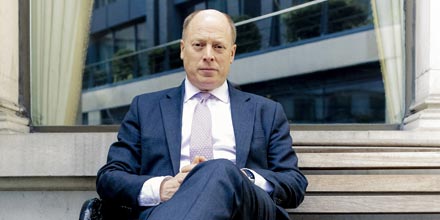
Dominic Johnson – Chair of New City Initiative and CEO, Somerset Capital Management.

Ben Dyson – Founder of Positive Money. Chaired by Barbara Ridpath, Director of St Paul’s Institute.

This event was recorded at St Paul’s Cathedral, London on 28th October 2014.

Categories
History Press Releases

Dominic Johnson appointed as Chairman

IIMI, the independent City think tank pushing for cultural change in the Square Mile and beyond, announces the appointment of Dominic Johnson as Chairman, effective 1st July 2014. Mr Johnson replaces Magnus Spence, after a successful period at the helm.

Founded in 2010, the IIMI speaks for owner-managed firms concerned with the interests of clients and investors, and aims to restore public faith in the asset management sector.

Commenting on Mr Johnson’s appointment, Executive Director Gary Mead said: “Dominic has been a prolific and outspoken member of the IIMI since he helped set it up with Daniel Pinto in 2010, fighting against overzealous legislation from Europe and for a cultural revolution to align the interests of fund managers and their clients.”

Mr Johnson added: “I look forward to leading the charge towards better structures and a sounder culture in finance, helping small firms bloom, and working with other members of this unique organisation to achieve our collective goals.”

Mr Johnson, previously Deputy Chairman, is also CEO and Founding Partner of Somerset Capital Management LLP, the employee-owned $5.3bn Global Emerging Markets specialist fund management firm.

Dominic has spent the last 19 years raising capital for various institutions in Asia, the USA and the UK, starting with Robert Flemings in London in 1995 and Jardine Fleming in 1998. From 2001-2007 Dominic, with Jacob Rees-Mogg and Edward Robertson, built Lloyd George Management from $1.5bn under management to $16bn when he left in April 2007 to establish Somerset Capital.

ENDS

Categories
Submission

Submission: Banking Standards Review

Categories
Submission

House of Lords Economic Affairs Finance Bill Sub-Committee – Oral Evidence on Partnership tax alterations

Categories
History Press Releases

Magnus Spence appointed as Chairman

IIMI, the London and Paris based think tank, has appointed Magnus Spence as Chairman. He replaces Daniel Pinto who has stepped down after completing his three year term in the role.

Spence, who takes up the position with immediate effect, is CEO of City based investment manager Dalton Strategic Partnership (DSP), a business he founded in April 2002 following seven years at Merrill Lynch Investment Managers/Mercury Asset Management. He has been on the Board of IIMI since May 2010.

“It is with great pleasure that we announce Magnus’s appointment as Chairman of the NCI. An active member of the Board since May 2010, he has already played an important role in the organisation’s success to date and was the obvious choice to take over from Daniel who has successfully led the NCI since its creation.”

Derek Laud, Executive Director of IIMI

“IIMI is a unique organisation both in terms of its make-up and influence within the financial services sector. Under Daniel’s leadership and direction, the NCI has already demonstrated it has a valuable role to play in helping rebuild trust in the sector and it is a great honour to be taking over from him as Chairman.”

Magnus Spence, incoming Chairman of IIMI

ENDS

Categories
Policy Papers

Les Patrons Mangent Ici: A practical guide to better alignment in the financial services industry

As the financial services industry seeks to rebuild itself in the wake of the global financial crisis, the need to find new ways to manage risk becomes a greater part of the debate. With national governments, the European Union, and various global associations and supranational bodies all looking at additional ways to regulate the industry, this paper examines whether there is an alternative, and perhaps more effective, route to reforming the industry through the encouragement and incentivisation of behavioural change.

Better alignment of managers with their clients can reduce risk, improve performance, and rebuild trust in the financial services industry. We do not believe that this should be accomplished by additional regulation on remuneration or ownership, but rather through a process of cultural change and increased transparency. The aim of this paper is to offer practical suggestions about how investment managers can become better aligned with their clients, drawing on our experience as financial SMEs for whom this is a fundamental tenet of our businesses. We then explore how these suggestions can be applied to participants in the financial system more broadly. Finally, we offer suggestions to policymakers on how they can encourage better alignment within the financial system.

Policy Responses:

Response 1

Support and accreditation by regulators and industry stakeholders for the establishment of a ‘Code of Good Practice’ for the fund management industry.

Response 2

Deferral of income tax on remuneration fund managers are compelled to invest into their own funds, and limited deferral on voluntary co-investment in order to encourage alignment.

Response 3

Simplification of the regulations around making employees partners in financial LLPs, and encouraging employee ownership further in both companies and LLPs in line with policymakers’ efforts to increase employee ownership more broadly.

Categories
Policy Papers

Passive or Aggressive? Why the Growth In Tracking Products Should Concern the Industry and Investors

The explosive growth of Exchange Traded Funds (ETF) over the last decade is the latest in a long line of financial innovations to come out of the investment banks who, over the last five years, have seen many of their traditional revenue streams evaporate. Behind these apparently simple, easy and cheap financial vehicles there are armies of traders employed in their ‘construction’. It would not be too far from the truth to say that swaps, futures and stock lending departments now rely for their very existence on the increasing appetite for the ETF.

The purpose of this short note is to point out the downside of this latest of financial innovations. The marketing and lobbying muscle of the investment banking fraternity has been extremely effective at highlighting the advantage to investors of the ETF. The potential downsides of these instruments are less often heard.

Since Jack Bogle launched the First Index Investment Trust in 1976, assets in tracking products have grown from just $11 million to over $1.5 trillion today. Whilst these funds initially focused on equity indices such as the S&P 500, there has recently been an explosion of products in more esoteric and illiquid markets, with ETFs accounting for a large proportion of this growth (ETF AUM has increased by 40% p.a. over the last decade). Investors can now buy ETFs in anything ranging from agricultural commodities to one providing leveraged exposure to volatility.

The growth of ETFs has been embraced with relish by the financial services industry and such products now constitute a highly profitable earnings stream. For investment banks, profit margins on ETFs are significantly higher than on traditional actively managed products. Beyond management fees, issuers make extra profits through securities lending, swap origination and futures sales. The high profitability of ETFs creates a powerful incentive for issuers to continue aggressively expanding the number of markets and assets that ETFs purport to track, regardless of whether this is to the benefit of investors and securities’ markets in general.

Good ideas taken too far would be an apt summary of the history of financial innovation. While the ability of investors to gain exposure to a broad array of asset classes at a low cost should be seen as a positive development, the enormous increase in both the scale and scope of ETFs brings with it a number of dangers, which need to be considered by both investors and regulators. Such dangers affect both broader market participants in the form of higher volatility and higher stock correlations, as well as higher valuations of indexed stocks. Investors in ETFs are also exposed to counterparty risk and in certain asset classes, returns far below those of the underlying assets.

Categories
History

IIMI Europe launches

IIMI expands into Europe following talks in Brussels.

IIMI is now a Europe-wide body. IIMI’s new European members represent some of the Continent’s most high-profile independent asset management firms and bring the total assets managed by the organisation’s members to in excess of £250 billion.  

Since its inception in 2010, IIMI has successfully furthered the message that independent, entrepreneurial firms do not pose the same risk to the economy as big banks and as such should not be treated the same by regulators. 

IIMI has produced two highly lauded policy papers and work on a third is underway. It has made several submissions to the FSA, the House of Lords and the Independent Commission on Banking and its Patron is the Lord Mayor of London. Given the increased focus on the future of pan-European financial regulation, in 2011 IIMI also met with representatives of the European Commission to discuss the regulation of the independent asset management sector. 

IIMI left this meeting convinced that in order to have a voice in the future of European regulation, it would be essential to go beyond national borders and enter into direct dialogue with EU regulators. The expansion of IIMI’s membership to include seven French firms represents an unprecedented step toward furthering relations between financial entrepreneurs in the UK and on the Continent.  IIMI aims to further extend its European reach and is in early stage discussions with potential new members from Italy and Germany, among others.  

With its newly expanded membership base, “IIMI Europe” aims to enhance its profile among regulators as a strong, credible voice for financial entrepreneurs across Europe. Organised as a think tank comprised of practitioners, not as a trade body, IIMI is uniquely placed to help Brussels develop practical solutions to complicated financial issues. 

Derek Laud, Director of IIMI said: 

“Very few organisations have adopted a pan-European approach to influencing financial regulation. In taking this step, IIMI has created an unparalleled body for the independent asset management sector and a unique source of professional knowledge. 

The EU has consistently shown that it does not understand the independent asset management sector in Europe. With an international membership, we hope to correct that by taking our message directly to Brussels and raising the industry’s profile in a way that national organisations are incapable of doing.” 

Categories
Policy Papers

Start Up Britain is Here in London: Why it is crucial to support financial SMEs

The impetus for this paper arose in a most unlikely manner. At a meeting with the NCI, the Business Secretary Dr. Vince Cable asked about the scale of small and medium sized financial services businesses, and how many jobs this sector provided, in the capital. Nobody had the answer. The Board of the New City Initiative promised to find out and to report back to the Secretary of State. With the significant assistance of IMAS Corporate Advisors and the Lord Mayor’s office, we delved into the data, and found that this interesting question revealed some surprising statistics. We therefore thank the Business Secretary for inadvertently initiating our latest policy paper, which we hope will fill some gaps in knowledge about this robust and thriving section of the financial services sector in the UK (and indeed by inference in Europe more widely). As this paper will demonstrate, the so-called “City” is far from being about the financial giants alone.

Taxpayers were called upon to bail out ‘big banks’ after the financial crisis, leading many voters to resent the financial services industry bitterly. But there is another City. It is made up of entrepreneurs who manage significant sums on behalf of investors and employ many tens of thousands of people. Some of us have come together to form the NCI, whose members alone have some £200 billion under management and employ several thousand individuals.

However we represent but a small part of the diverse body of financial SMEs that contribute to the City. According to our research sources, the financial SME sector (typically defined as firms employing less than 250 employees) as a whole employs up to an astonishing 57 per cent of the UK’s total financial services staff. Accurate figures for assets under management are harder to come by, but the UK’s Financial Services Authority (FSA) suggests that UK-based hedge funds alone manage some $550 billion.1 In Europe as a whole, it is estimated that the hedge fund industry – just one category of the SME sector – employs 50,000 people across the EU, and that their partners, employees, consultants and service providers pay taxes of more than $8 billion every year.2 Clearly this is just the beginning as far as the wider financial SME sector is concerned across Europe.

We believe that financial entrepreneurs are a valuable asset for the UK and wider EU at a time when economic growth, particularly outside the European core, cannot be taken for granted. Given the rise of emerging economies and the pressing need for developed nations to compete, SMEs are vital because they stimulate excellence and hence competitiveness within the financial services sector.

In the light of financial SMEs’ significant roles as employers and innovators, as discussed further below, we believe that there is a vital need for regulators to ensure that the new regulatory framework distinguishes between different kinds of financial businesses with a particular focus on the levels of risks they may (or may not) create for the financial system. This will help the City and financial centres throughout Europe to thrive as valuable economic assets for their own countries and for the EU more widely. The alternative is to expose Europe’s financial centres to avoidable competition from offshore regimes such as those in Switzerland and many emerging markets, where the authorities aim to attract institutions through lighter regulatory and tax burdens.

This paper covers lots of ground, but it focuses on one key point. We must avoid imposing regulations designed for banks and shadow banks on SMEs.

The first step towards this is to correct the misconception – common in policymaking and regulatory circles in both the UK and Europe more widely – that the financial sector consists solely of big banks. When regulators and other officials deal with financial services companies, they must distinguish between two categories. The first includes those businesses which use their balance sheets for trading purposes. The second is comprised of companies that do not – which are, effectively, third-party advisers – and which also demonstrate a strong focus on alignment with their clients. The UK government set out its commitment to small businesses of all industries in its budget of March 2011, although many would argue that its proposals did not go far enough. With this principle established, we would like to see measures taken to encourage SMEs in the financial services sector specifically, based on the key distinction identified above.


Categories
History

Crowned ‘City Champion’

Spear’s Wealth Management Awards 2011: Spear’s City Champion Award

Reproduced from the original article available the Spear’s website:

Now for a new award. Over the past few years in the run-up to the crash, the City did not distinguish itself with its telephone-number bonuses, conspicuous consumption and behaviour some described as financial Russian roulette. And it has hardly been glorious since. 

Spear’s has long been concerned about this and when combined with a wider lack of social mobility, a sense of disadvantage as evidenced by the summer riots and in Occupy the Stock Exchange, and government cuts of social services, we’re headed for trouble.

That’s why Spears have introduced the City Champion Award. Chosen by the Spear’s editorial staff, this award is given to a person, company or scheme which promotes the higher moral aspirations they have for the City and provides an example to others, using its resources for social good.

The first winner of this award is a scheme which has brought together some of the City’s best wealth management firms and encourages them to provide internships to children from disadvantaged backgrounds. Individuals who normally would stand little or no chance of getting a job in finance simply because they lack connections or the right accent or the ability to fit in.

This scheme sets an example. It says, Tear down your walls and bring in the best, a sentiment Spear’s entirely endorses. So I am very happy to announce that the first Spear’s City Champion Award goes to, the New City Initiative

Daniel Pinto of Stanhope Capital, director of New City Initiative, collected the award