Categories
History Policy Papers

Decentralising Fund Management: Encouraging Regional Growth

I am pleased to introduce this paper on the opportunities for decentralising fund management in the UK and encouraging regional growth.

Innovation by entrepreneurial UK asset managers in delivering access to investment markets via collective investment schemes has gone hand in hand over the years with the development of ever wider investment expertise. The lawyer Philip Rose founded The Foreign & Colonial General Trust in 1868, and Ian Fairbairn and George Booth launched M&G’s First British Fixed Trust in 1931 to replicate the resilience and popularity of mutual funds in the United States. Adaptation and evolution have continued over the years to allow UK asset and wealth management firms to remain competitive in delivering their investment expertise to different categories of client. Unit Trusts have morphed into OEICs, and front end charges and bid/offer spreads have disappeared.

Both fresh and familiar challenges, from the COVID economic shock to Brexit, are emerging which make the UK ripe for a new generation fund structure which could also be a catalyst for industry and job growth in servicing the assets invested in a new UK domiciled fund structure.

Nick Mottram

Chairman, New City Initiative
Partner & Chairman, Dalton Strategic Partnership LLP

Categories
Press Releases

IIMI calls for new UK fund structure to bolster industry’s position in Asia-Pacific

IIMI, the boutique asset management think tank, is calling for the development of a UK fund structure that could compete with UCITS and AIFs in Asia-Pacific (APAC), in order to strengthen the global distribution footprint of UK funds and their position in the region. The full paper, entitled “Facilitating Connectivity: Strengthening UK- APAC Fund Ties”, can be found here.

IIMI also proposes that the UK should further leverage the Mutual Recognition of Funds (MRF) scheme with Hong Kong while negotiating further MRFs with other critical markets, most notably China. In addition, the UK should become a signatory to at least one or both of the Asia Region Funds Passport (ARFP) or ASEAN Collective Investment Scheme (CIS).

Background

The UK’s asset management industry manages around £400 billion on behalf of clients in APAC. Currently, many of the UK investment products that are sold to institutional and retail clients in APAC are regulated under EU law, principally either UCITS or the Alternative Investment Fund Managers Directive (AIFMD).

Previous uncertainty about the future of delegation and the EU’s ongoing refusal to extend the much vaunted AIFMD marketing passport to core APAC jurisdictions (namely Hong Kong and Singapore) have damaged the EU’s reputation in APAC circles.

As a result, some experts see this impasse as an opportunity on which the UK can capitalise. In addition, should post-Brexit equivalence fall short in trade negotiations, the impetus for the UK to create its own fund regime and to build in mutual links with APAC, and the rest of the world, becomes greater.

Proposals

IIMI believes that there are several ways in which the UK funds industry could strengthen its distribution footprint in key APAC markets, where many of IIMI’s members see a large growth opportunity:

  • UK policymakers/regulators should capitalise on the UK funds industry’s opportunity to further cement itself in APAC by developing a UK-own fund brand to compete with UCITS and AIFs in the region.
  • The establishment of such a UK fund brand will require input from industry and government, and this is something the IIMI is willing to facilitate in coalition with other associations and market participants. The process of setting up this new fund structure will not be easy, but IIMI believes it is certainly achievable.
  • The UK should further leverage the MRF scheme with Hong Kong, and regulators ought to negotiate further MRFs with other critical markets, most notably China.
  • The UK should become a signatory to a regional fund passporting regime such as the ARFP or ASEAN CIS in order to maximise its APAC distribution footprint.

“IIMI believes the UK funds industry has an excellent opportunity to further embed itself in APAC, where a number of our members see the largest growth potential. Developing a UK fund brand to compete with UCITS and AIFs in the region would be one way of doing this, and would be beneficial for the UK and Asian economies. As the representative of leading owner managed firms in the UK and Europe, IIMI has already extended the UK fund management community’s links with APAC through the 2019 launch of IIMI Singapore, and we are keen to build on this.”

Nick Mottram, Chairman of IIMI

ENDS

Categories
History Policy Papers

Facilitating Connectivity: Strengthening UK-APAC Fund Ties

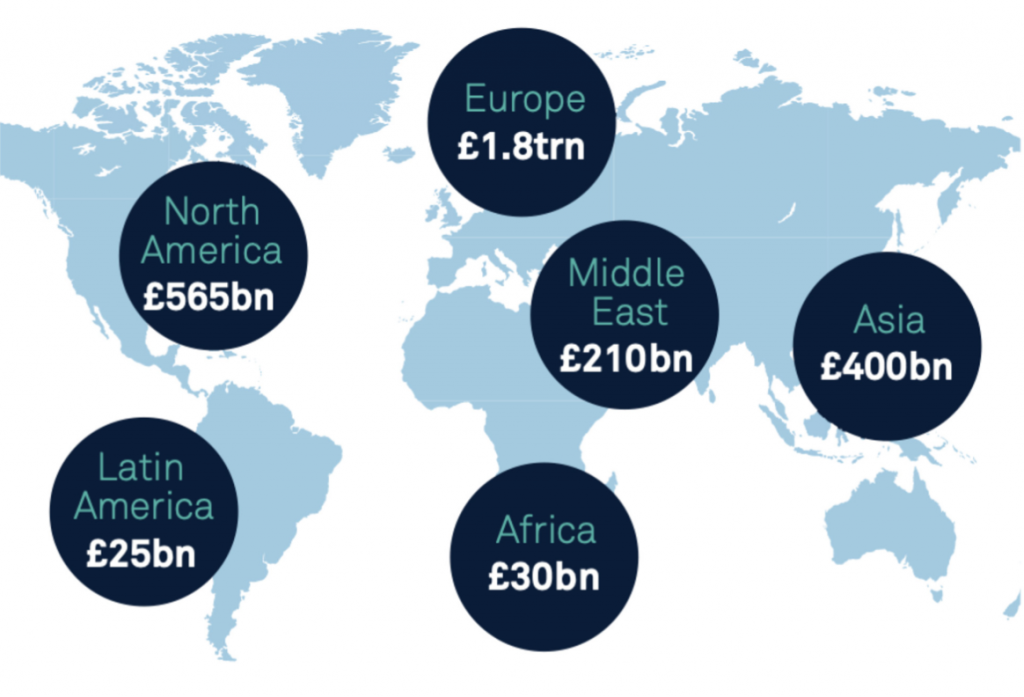
Despite the relentless political uncertainty gripping the UK, the country’s position as one of the dominant centres for investment management in the world remains unaffected. Second only to the US by size, the UK’s asset management industry is responsible for overseeing £7.7 trillion in capital, of which £3.1 trillion are mandates on behalf of foreign investors, a figure that is largely unchanged since 2017. The European Economic Area (plus Switzerland) accounts for the majority (59%) of the foreign sourced assets controlled by domestic UK fund houses although non-EEA capital comprises a large proportion of that AuM total too.

page2image219574384
Figure 1: Assets managed by UK firms for overseas clients
Categories
History Press Releases

Nick Mottram appointed as Chairman

IIMI, the boutique asset management think tank, announces the appointment of Nick Mottram as Chairman, effective 1 December 2019. Nick succeeds Jamie Carter, CEO of Oldfield Partners, who will remain on the board.

Susannah de Jager continues as Deputy Chairperson, and has been joined in the role by Sebastian Stewart, Head of Client Services at Somerset Capital Management.

Nick Mottram is the Chairman and Global & Asian Equities Fund Manager at Dalton Strategic Partnership, having joined the firm in March 2010. He has over 30 years of investment experience, with other senior roles including Founding Partner at Origin Asset Management, Head of Equities at Investec Asset Management and Global Head of Research at Schroder Investment Management. Nick is a Chartered Accountant and has a degree in English from the University of Kent.

Sebastian Stewart is a Partner at Somerset Capital and Head of Client Services, having joined the firm in 2012. He graduated from the University of Edinburgh with a first class degree in Mathematics and Business Studies and is a CFA charterholder.

Founded in 2010, IIMI speaks for owner-managed firms concerned with the alignment of interests with clients, and aims to offer an independent, expert voice in the debate over the future of financial regulation and competition.

“Dalton Strategic Partnership has been a member of IIMI for many years now and I have always been impressed by its focus and work. Jamie Carter has left IIMI extremely well placed going forward and I would like to thank him for his leadership.

“I look forward to meeting with the membership and continuing IIMI’s work of promoting the interests of owner-managed firms. In these times of change, it is more important than ever that the boutique asset management industry is given a voice to help shape the debate around the future of financial regulation, as well as advocate the need for a competitive landscape.”

Nick Mottram, newly appointed Chairman of IIMI

“It has been a privilege to serve as IIMI’s Chairman and I would like to thank the rest of the team for their ongoing support during my tenure. I am delighted with the progress we have made, notably the recent launch of IIMI Singapore. Nick has long been a champion of IIMI’s work and I have no doubt that he is the right person to chair the group as it builds on its successes to date.”

Jamie Carter, outgoing Chairman of IIMI 

ENDS

Categories
Press Releases

IIMI Launches Singapore Branch

IIMI, the boutique asset management think tank, is pleased to announce that it has launched operations in Singapore in response to demand from asset managers in the region.

There are 11 founding members in IIMI Singapore, which is chaired by Timothy Hay, the CEO of Somerset Capital Management’s Singapore office.

Since its foundation in 2010, IIMI has offered an expert voice in the debate over the future of financial regulation, representing independent, owner-managed firms that are entirely focused on and aligned with the interests of their clients and investors. Today, its European membership is comprised of 46 leading independent asset management firms from the UK, France, Norway and Switzerland, managing approximately £500 billion of clients’ money and employing several thousand people.

Both IIMI branches in Europe and Singapore, along with their combined membership, will work with the Monetary Authority of Singapore (MAS) and the FCA to open up and increase opportunities between the two markets as they share experiences and ideas. This includes supporting MAS efforts to develop the Variable Capital Company (VCC) fund structure, on which IIMI will hold a meeting next month with London members and a delegation from MAS.

We are very proud of what IIMI has achieved over the last nine years in promoting the values and interests of boutique asset managers, and we feel the time is now right to expand our geographical presence. Singapore has one of the most thriving asset management communities in the East and we look forward to working with the new IIMI team there as we maintain an open dialogue with both the MAS and FCA for the benefit of our expanding membership.

IIMI Chairman Jamie Carter

IIMI has established itself as a respected voice in the asset management industry and we look forward to leveraging its experience and learnings for our new IIMI Singapore members. Owner-managed, client-centric firms play a key role in preserving the stability and long-term focus of the financial sector and we are pleased to support the important work of independent asset managers in Singapore and the surrounding region.

IIMI Singapore’s Chairman Tim Hay

ENDS

Categories
History

IIMI Singapore launches

IIMI, the boutique asset management think tank, is pleased to announce that it has launched operations in Singapore in response to demand from asset managers in the region.

There are 11 founding members in IIMI Singapore, which is chaired by Timothy Hay, the CEO of Somerset Capital Management’s Singapore office.

Since its foundation in 2010, IIMI has offered an expert voice in the debate over the future of financial regulation, representing independent, owner-managed firms that are entirely focused on and aligned with the interests of their clients and investors. Today, its European membership is comprised of 46 leading independent asset management firms from the UK, France, Norway and Switzerland, managing approximately £500 billion of clients’ money and employing several thousand people.

Both IIMI branches in Europe and Singapore, along with their combined membership, will work with the Monetary Authority of Singapore (MAS) and the FCA to open up and increase opportunities between the two markets as they share experiences and ideas. This includes supporting MAS efforts to develop the Variable Capital Company (VCC) fund structure, on which IIMI will hold a meeting next month with London members and a delegation from MAS.

Commenting on the launch, IIMI Chairman Jamie Carter said: “We are very proud of what IIMI has achieved over the last nine years in promoting the values and interests of boutique asset managers, and we feel the time is now right to expand our geographical presence. Singapore has one of the most thriving asset management communities in the East and we look forward to working with the new IIMI team there as we maintain an open dialogue with both the MAS and FCA for the benefit of our expanding membership.”

IIMI Singapore’s Chairman Tim Hay added: “IIMI has established itself as a respected voice in the asset management industry and we look forward to leveraging its experience and learnings for our new IIMI Singapore members. Owner-managed, client-centric firms play a key role in preserving the stability and long-term focus of the financial sector and we are pleased to support the important work of independent asset managers in Singapore and the surrounding region.”

Categories
Press Releases

Concern among members that M&A activity within the asset management industry is reducing competition and undermining investor choice

IIMI, the boutique asset management think tank, has today published a paper calling for a more proportionate approach to regulation in response to increasing consolidation in the sector, which many of its members believe is reducing competition and investor choice. The full paper, entitled “M&A in Asset Management: Is it strangling boutiques?”, can be found here.

The paper explores the drivers behind the ongoing M&A activity and questions whether decisive action needs to be taken at a governmental or regulatory level. As part of this analysis into M&A trends within the industry, IIIMI spoke to a number of its diverse boutique asset manager members about the impact consolidation was having.

Drivers for consolidation

Asset management M&A has been riding high over the last few years. According to data from Mercer Capital, both deal volume and deal count in 2018 were at their highest levels since 20091. Consolidation at large asset managers has been driven by a combination of factors, including the reallocation of funds by investors into cheaper passive products, and a dramatic increase in managers’ costs. Regulations in the EU have been particularly intense for asset managers, with rules such as AIFMD, MiFID II, EMIR, UCITS V, GDPR and PRIIPs all collectively affecting fund manager margins. For many firms struggling under the weight of these complex regulations, consolidation is often seen as the best option.

It has also been noted that there are “second order” barriers. Within the UK discretionary wealth management and IFA sector, there has been huge consolidation as firms deal with regulatory complexity and look to achieve economies of scale. As a result, they advise much larger pools of capital which must be allocated to managers who can accept sizeable investments, namely those with higher capacity. The biggest managers are typically the ones who can onboard the larger flows, but smaller funds – or those that are disciplined about capacity and the liquidity they offer – cannot accept these outsized allocations. Again, this is widening the gulf between big and small.

The performance case for boutiques

If investors are unable to access as many SME asset managers, they may struggle to obtain portfolio diversification through wider exposures to niche strategies, which can also have a negative impact on returns. One IIMI member noted: “As large asset managers get bigger, performance sometimes gets worse as it is not as easy to move in and out of trades. Even if investors are paying lower fees at these large fund managers, they might not be getting the performance they deserve. Boutique asset managers can give investors exposure to niche or specialised products, which is much harder to do at larger fund managers”. Furthermore, boutique asset managers have a proven track record of outperformance, both against their largest rivals and index trackers.

“It is clear there is widespread concern among our members that continued consolidation in the asset management industry will force investors to allocate into only the largest, dominant asset managers – ultimately depriving them of choice and potentially even returns. If the UK is to have a competitive asset management industry moving forward, IIMI strongly recommends that a more proportionate approach to regulation would be a good starting point to enable boutique managers to flourish alongside their larger peers.

“These new regulatory changes are a unique opportunity for asset managers to upgrade their business model, their FX operational processes and improve efficiency to reduce investment costs and improve fund performance. That can only be good for building strong business relationships.”

Jamie Carter, Chairman of IIMI

ENDS
Categories
Policy Papers

M&A in Asset Management: Is it strangling boutiques?

In the aftermath of the financial crisis, many asset managers saw M&A (mergers & acquisitions) with their competitors as a means to survival, principally a necessary evil by which to preserve their businesses amid the tumbling markets and as a counterweight to offset the sheer volume of client redemptions. Since then, M&A has only accelerated at major asset managers, as firms look to create economies of scale facilitating investor diversification and wider product distribution footprints. These larger enterprises can also better absorb the increasing operational and regulatory costs that come with running an asset management business in 2019. However, this rush towards consolidation carries risks.

In this paper, NCI looks at some of the implications which M&A is having on the boutique asset manager community. It also questions whether decisive action needs to be taken at a governmental or regulatory level to further scrutinise this M&A activity, especially if there is evidence that these transactions are drowning out competition and undermining investor choice. As part of this analysis into M&A trends within the industry, NCI spoke to a number of its diverse boutique asset manager members about the impact consolidation was having.

Categories
Press Releases

IIMI calls for boutique firms to be represented in debate about the future of the UK’s financial services in response to Treasury Select Committee’s inquiry

IIMI, the boutique asset management think tank, has called upon the Treasury Select Committee to include its representatives in any consultations and working parties associated with the Committee’s inquiry into the future of the UK’s financial services once the UK has left the EU. The full written submission, entitled “Carpe Diem: Advice and Opportunities from the Boutique SME Asset Management Sector to the Future of Financial Services”, can be found here.

The Treasury Select Committee examines what the Government’s financial services priorities should be when it negotiates the UK’s future trading relationship with the EU and third countries. The Committee launched its inquiry in January 2019 and invited stakeholders to submit written evidence in response.

Summary

The importance of SMEs to the broader economy is widely recognised. It is IIMI’s belief that its members – which are often manager or partner owned, with a distinct culture and propensity for co-operation that promotes innovation, client-focus and thoughtful risk-management practices – share characteristics, and support needs, with the broader SME sector.

The political and regulatory response to the Global Financial Crisis led to a focus on larger firms and the banking sector, and reforms implemented in response have sometimes led to unintended consequences, such as increased barriers to entry. Now that ten years have passed, and with the UK’s focus on opportunities for the future, IIMI submits that it is now time for an alternative, bottom-up approach that draws from the wisdom and efforts of the SME sector.

Drawing upon its past work, IIMI shows how its members offer a distinct and important contribution to the debate about the future of financial services, concluding that any consultations and working parties must include their representatives to give the optimal outcome for the broader economy and society.

The Unique Perspective of Boutique SME Asset Managers

IIMI’s submission provides proposals for the future direction of financial services through the lens of boutique asset managers, with a focus on the following areas:

  • Alignment of interest, culture and performance
  • Liquidity transformation
  • Broad-based innovation and the power of clustering
  • Stewardship and patient capital
  • Proportionality and incubation in regulation

“Boutiques, such as NCI’s members, are the SMEs of the asset management industry and are an important cluster of such activity for the UK and global economy. They promote innovation in the broadest sense – with corollary benefits for society – through economic growth, employment and global trade in services. As such, NCI believes that government and regulators best serve their broad constituencies by recognising and listening to the perspective and proposals of boutique firms: our members certainly welcome the opportunity to contribute to the debates ahead.”

Jamie Carter, Chairman of IIMI

ENDS
Categories
Policy Papers

Carpe Diem: Advice and Opportunities from the Boutique SME Asset Management Sector to the Future of Financial Services

NCI considers the unique and considered perspective of its members, the SMEs of the asset management industry and broader financial services, in guiding a path for the future of financial services. The political and regulatory response to the Global Financial Crisis led to a focus on larger firms and the banking sector, and reforms implemented in response have sometimes led to unintended consequences, for example in the effect of liquidity regulations on the asset management sector and increased barriers to entry. Now that ten years have passed, and with the UK’s focus on opportunities for the future, NCI submits that it is now the time for an alternative, bottom-up approach that draws from the wisdom and efforts of the SME sector. Drawing upon its past work, NCI shows how its members offer a distinct and important contribution to the debate about the future of financial services, concluding that any consultations and working parties must include their representatives to give the optimal outcome for the broader economy and society.